




- Details
- Written by: Bruno Pereira, Chair

The New Jersey Libertarian Party affirms that the Second and Fourteenth Amendments protect the right of law-abiding citizens to possess AR-15-platform and similar semiautomatic rifles.
This December the Supreme Court will hear Viramontes v. Cook County and Grant v. Higgins. These consolidated cases present a clear question: whether governments may impose categorical bans on the most commonly owned rifles in civilian hands. The Court should answer that they may not.
- Details
- Written by: Bruno Pereira, Chair

Over the last several years, New Jersey has funneled taxpayer dollars into over 2,000 Automated License Plate Readers (ALPRs)—commonly known as Flock cameras.
Every time a car passes one of these devices, its image is captured and logged into a central database, powered by artificial intelligence. The result? A dragnet surveillance apparatus capable of tracking every resident’s daily life. Where you shop, which doctors you consult, which gun stores you patronize, and who you visit are all monitored, cataloged, and analyzed.
The use of these cameras has already been exploited for such acts as domestic spying, stalking women, sharing sensitive data, and political manipulation. Combined with the vulnerability of centralized metadata to cybercrime, this program creates a severe privacy concern for every New Jerseyan.
- Details
- Written by: Jay Edgar
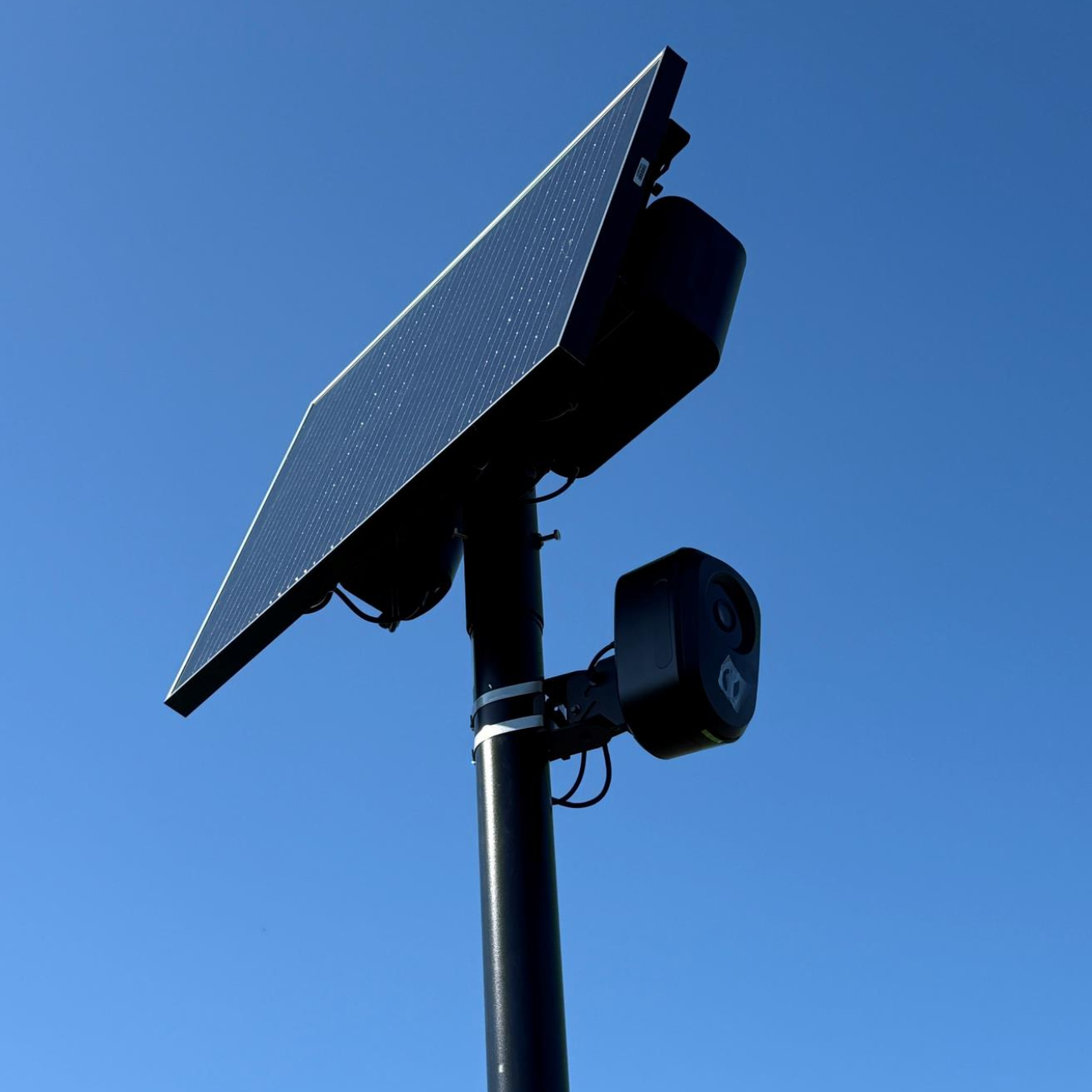
Originally published by our associates at DeFlockNJ.org, republished with permission.
New Jersey residents have shown that they overwhelmingly oppose mass surveillance. Town council meetings have regularly seen residents express concern over the growing number of cameras around us. Opinions expressed online further demonstrate that we are overwhelmingly opposed to unregulated surveillance. As a result, our elected representatives are slowly beginning to react.
As a direct result of public outcry at town council meetings, Cherry Hill Township (Camden County) has decided not to renew its contract with Flock at the end of the year. While this is a significant win for local privacy, the fight isn't over. According to Mayoral Chief of Staff Brian Bauerle, officials are continuing to evaluate the technology and may resurrect surveillance in Cherry Hill with a different brand of camera system. Bauerle stated, “The police department is in the final stages of evaluating Axon automated license plate readers.” Residents must remain vigilant to ensure one surveillance network isn't simply swapped for another.
- Details
- Written by: Dr Loren Jay Chassels DO MST FAAIM FAWM
|
|
|
Dr. Loren Jay Chassels is a Board member of the New Jersey Libertarian Party. Loren earned his doctorate from A.T. Still University of Health Sciences, followed by an internal medicine residency in 2007. Now board-certified in internal medicine, he has practiced as a hospitalist and emergency physician for nearly two decades. See more at lorenjchassels.com |
For the last 12 years, my company, DR. CHASSELS, LTD.®, paid the health insurance premiums for my daughter and me. We had Blue Cross Blue Shield of Illinois because I thought it was the most trustworthy of the companies.
Last year, I retired and moved to New Jersey. Being a responsible patient (rare for a doctor), I arranged new-patient visits with a family-practice physician, a cardiologist, and a cardiac electrophysiologist to replace my doctors in Illinois. That expanded to a referral to gastroenterology for a screening colonoscopy. No problem. I’m doing the right things and being responsible.
After it was all performed, I started receiving the bills. The eight medications cost $30–60 each, as they have since my dilated cardiomyopathy diagnosis and three cardiac arrests. I paid full price for each physician visit and assumed it all went toward the $14,000 maximum out-of-pocket.
Then I saw the bill BCBS of Illinois rejected for being out of network: colonoscopy hospital services for $15,000. I was responsible for 100% of that charge. After a few months of phone calls, I switched to New Jersey Medicaid and Virtua ate the entire bill.
- Details
- Written by: Walter Olson
Originally published on Cato.org, republished under Creative Commons agreement.
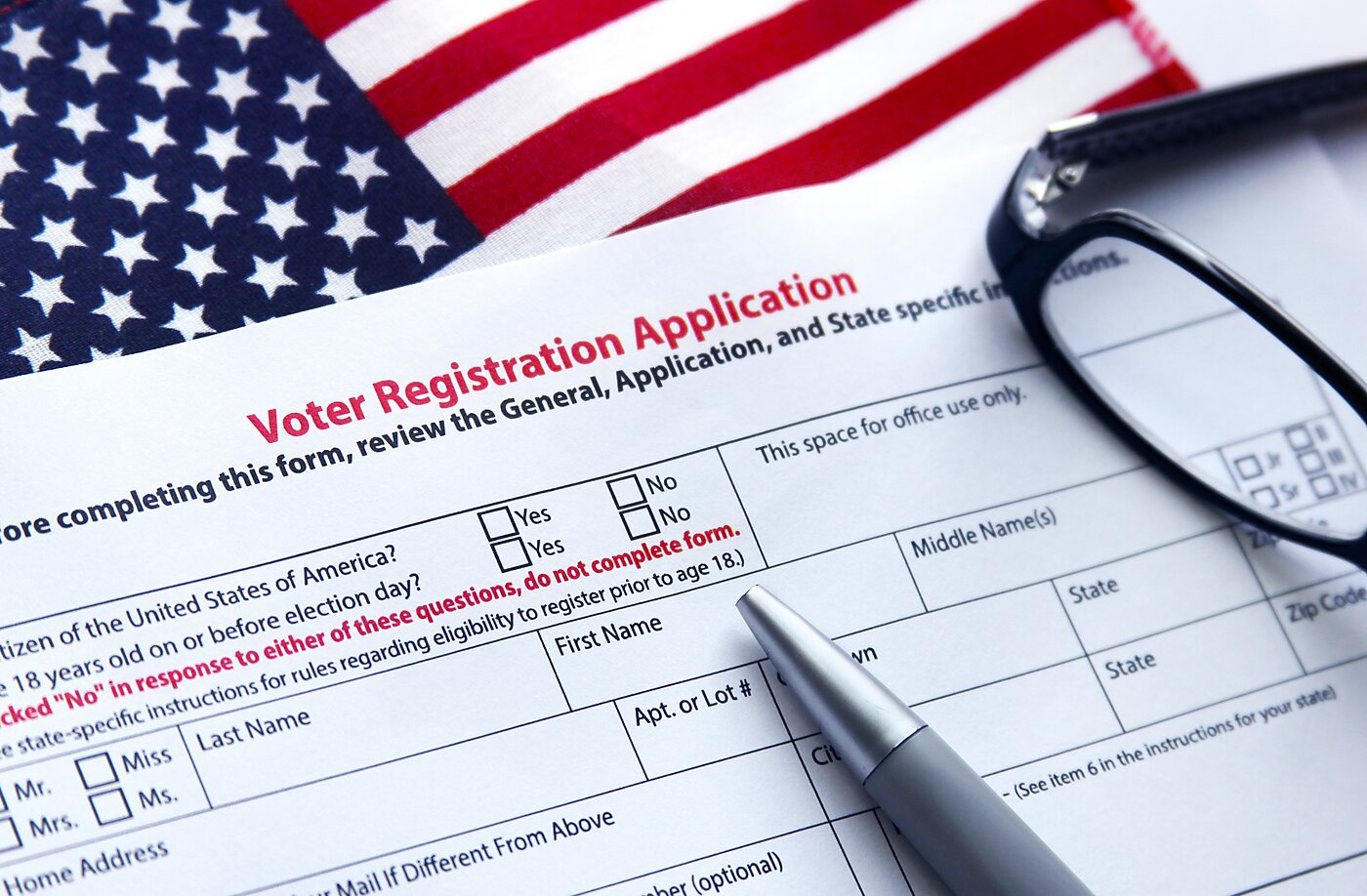
My colleague Stephen Richer has already weighed in with observations on the New Jersey voter registration fiasco, in which a software error mistakenly registered roughly 6,600 persons to vote between June 12, 2023, and June 25, 2024, even though they had affirmed they were not US citizens. Of these, somewhat fewer than 400 later voted.
So far as I am aware, this is by far the biggest instance of unlawful noncitizen voting in the US unearthed in the past generation, so it may matter that it seems to be widely agreed that the mistaken registration did not result from intentional misconduct by the persons added to the rolls, the state, or its software vendor. Damningly, however, when the error was found and the software fixed, the state “never notified affected residents or removed their names from the rolls,” according to the NYT account. Incoming Gov. Mikie Sherrill at a press conference called this “unacceptable.” That’s for sure.
- Details
- Written by: Dr Loren Jay Chassels DO MST FAAIM FAWM
|
|
|
Dr. Loren Jay Chassels is a Board member of the New Jersey Libertarian Party. Loren earned his doctorate from A.T. Still University of Health Sciences, followed by an internal medicine residency in 2007. Now board-certified in internal medicine, he has practiced as a hospitalist and emergency physician for nearly two decades. See more at lorenjchassels.com |
On July 17, 2026, the United States Court of Appeals for the Third Circuit issued its landmark en banc decision in "Association of New Jersey Rifle and Pistol Clubs I v. Attorney General New Jersey, No. 24-2415,” holding that New Jersey’s prohibitions on many semiautomatic rifles and its ten-round magazine capacity limit violate the Second Amendment.
The court’s ruling represents an important reaffirmation of the Constitution and the principle that government exists to protect rights, not to diminish them.
For years, the citizens of New Jersey have been subjected to some of the nation’s most restrictive firearm laws. Those laws did not target violent criminals, who routinely ignore firearms regulations. Instead, they imposed sweeping restrictions upon peaceful, law-abiding men and women who sought nothing more than to exercise a constitutional right guaranteed by the United States Constitution.
The Third Circuit reached several significant conclusions:
- The court held that semiautomatic rifles commonly owned by law-abiding Americans, including AR-15-style rifles, are protected “arms” under the Second Amendment.
- Applying the framework established by the United States Supreme Court in New York State Rifle & Pistol Association v. Bruen, the court concluded that New Jersey failed to demonstrate a historical tradition of analogous firearm restrictions that would justify its prohibitions.
- Details
- Written by: Dr Loren Jay Chassels DO MST FAAIM FAWM
|
|
|
Dr. Loren Jay Chassels is a Board member of the New Jersey Libertarian Party. Loren earned his doctorate from A.T. Still University of Health Sciences, followed by an internal medicine residency in 2007. Now board-certified in internal medicine, he has practiced as a hospitalist and emergency physician for nearly two decades. See more at lorenjchassels.com |
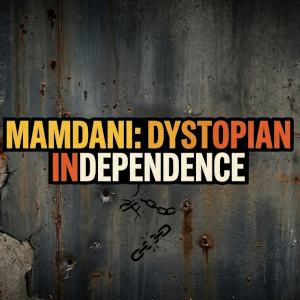
Libertarianism celebrates individual liberty, voluntary cooperation, limited government, property rights, free markets, and the radical idea that people thrive when left free from coercive state power—not when they’re herded into collective dependence. The Declaration of Independence was a thunderous rejection of top-down tyranny in favor of self-governance and unalienable rights. Mamdani’s address, by contrast, reframes July 4th as an occasion for dwelling on systemic flaws, identity-group grievances, and calls for more government intervention—precisely the opposite spirit.
His speech opens with evocative but somber imagery of New York Harbor: tides, explorers, passengers seeing “men waiting at the docks to take them into bondage,” “tenements rife with squalor,” “industry rumbling” amid “steam and smoke,” and a “towering monument to freedom” mixed with hardship. It repeatedly asks “what do we see?” when looking at America and answers with contradictions, hunger amid trillionaires, monopolies, “oligarchs who buy elections,” “masked agents terrorizing our streets,” and historical oppression.
This is not a celebration of independence, resilience, or human achievement under liberty—it’s a somber lecture on perpetual struggle against “power and influence and wealth.” Note the depressing tone: instead of fireworks, innovation, and the pursuit of happiness, it feels like a dirge. Reports and imagery from the event (newly naturalized citizens standing by) suggest the bystanders often wore solemn, almost mournful expressions—more like attendees at a protest or funeral than joyous patriots on the eve of the nation’s 250th birthday. True independence should inspire uplift and pride in what free individuals have built, not guilt and calls for redistribution.
- Details
- Written by: Dr Loren Jay Chassels DO MST FAAIM FAWM
|
|
|
Dr. Loren Jay Chassels is a Board member of the New Jersey Libertarian Party. Loren earned his doctorate from A.T. Still University of Health Sciences, followed by an internal medicine residency in 2007. Now board-certified in internal medicine, he has practiced as a hospitalist and emergency physician for nearly two decades. See more at lorenjchassels.com |
Communism and socialism, in all their variants, are inherently flawed systems that undermine human flourishing, economic prosperity, and individual liberty. They concentrate power in the hands of the state, stifle innovation and productivity, and have repeatedly produced poverty, authoritarianism, and human suffering wherever implemented at scale. Free-market capitalism, grounded in private property, voluntary exchange, and individual rights, remains the superior framework for human progress. This conviction has profoundly shaped my own life decisions, including my choice to retire early with significantly less savings than I had originally planned.
My Decision for Early Retirement
As someone who has worked diligently and saved consistently for many years, I now see limited incentive to continue full-time employment. A substantial portion of my income is diverted through taxation and allocated to expansive government programs rooted in socialist principles—programs often characterized by inefficiency, waste, and corruption. Rather than directing my earnings toward personal savings, investment, or retirement security, a significant share supports bureaucratic expansion and initiatives that yield suboptimal outcomes. The marginal benefit of additional years of labor does not justify the costs when so much of the reward is redirected and mismanaged. Consequently, I have chosen to retire earlier than originally anticipated, accepting more modest lifetime savings in exchange for greater personal time and autonomy. This decision reflects the disincentives created by such policies and illustrates their broader impact on individual motivation and economic behavior.
The Economic Impossibility of Rational Central Planning
At the core of both communism (collective ownership of the means of production) and socialism (heavy state intervention, redistribution, and control) lies the rejection of private property and market prices. Ludwig von Mises demonstrated in the 1920s that economic calculation under socialism is impossible. Without genuine market prices reflecting supply, demand, and scarcity, central planners lack the information needed to allocate resources efficiently.
Subcategories
Videos
This is a page of various videos that we have either created or found interesting. Be sure to check out and follow our YouTube page.
Open Government Advocacy Project
 The Open Government Advocacy Project is a committee of the NJ Libertarian Party. Its goal is to ensure transparency and accountability at all levels of government. Articles posted here are a subset of the work of the committee. For more information visit the Open Government Advocacy Project blog.
If you would like to demand accountability and ensure that your local governing body or school board adheres to the Open Public Records Act we can help you request information from them. Contact John Paff, the project chair here.
Insight New Jersey
NJ government is huge and complex. Private industry is shrinking while the size and cost of government bureacracy continues to grow. The articles posted here provide a guide of the NJ State Government and can be used by citizens and candidates for office to evaluate what departments can be reduced drastically in size.
We'll start with just some of the departments and provide a breakdown on what they do (or purport to do), how many employees they have and how big their budget is.
Preempted Ordinance Repeal Project
The New Jersey Libertarian Party's Preempted Ordinance Repeal Project (“the Project”) seeks to get New Jersey municipalities to repeal loitering ordinances that should have been -- but were not -- repealed when the New Jersey Code of Criminal Justice was enacted in 1979. The Project has successfully had loitering ordinances repealed in over 30 towns. For a summary listing of all the towns see Preempted Ordinance Repeal Project page.
Police Accountability Project
The Police Accountability Project is a committee of the NJ Libertarian Party. Its goal is to search out cases of police misconduct, file former Internal Affairs (IA) complaints when appropriate, and to publicize violations of rules and laws by the police. There may be other stories posted on the NJLP Police Internal Affairs Complaint Blog page.
If you would like to help or know of a case we should be looking at, contact the committee at
Legislative Affairs Committee
The Legislative Affairs Committee was created to allow a select core of Volunteers to take action on legislation and policies which directly affects the people of New Jersey.
[INTRO VIDEO - HOSTED ON NJLP STATE YOUTUBE AND EMBEDED HERE]
Staff
Legislative Director and Committee Chair
Volunteers: